

In 2026, search engine optimization (SEO) is far more than a ranking game. Forward-thinking companies don’t just chase higher positions on Google. They engineer real revenue growth from organic search, customer engagement, and measurable business outcomes.
Today’s SEO plays a central role in revenue generation, from attracting high-intent visitors to converting them into leads and customers. Let’s explore how an SEO company drives revenue in 2026 — not just rankings.
1. SEO Is Now a Revenue Multiplier, Not a Vanity Metric
Most businesses once focused on keyword rankings. That changed. Modern SEO connects visibility to actual revenue outcomes.
According to recent 2026 data, “Investments in high-quality SEO deliver an average ROI of 748% — which means roughly $7.48 for every $1 spent goes back into the business”.
These kinds of returns position SEO alongside the most efficient growth channels available.
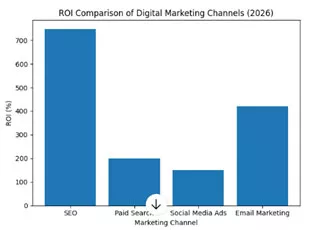
SEO’s value is clear: more organic traffic means more potential customers entering the top of your sales funnel. But the real payoff happens when that traffic converts — not just when it ranks.
2. Organic Search Drives Quality Leads That Convert
Organic search still captures the lion’s share of customer intent among all digital channels.
Data shows:
- Organic search accounts for around 53% of all trackable website traffic.
- B2B companies generate nearly half of all revenue from SEO and organic channels.
Why does this matter? Because SEO brings in customers when they are already looking to buy. That means lower acquisition costs and higher conversion potential.
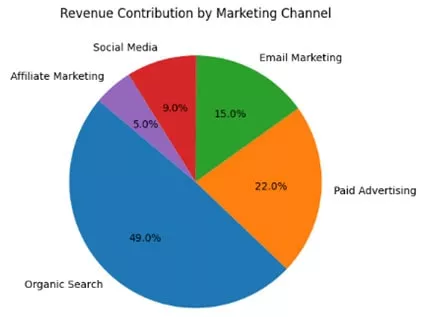
An SEO company that understands intent can produce content and site experiences to match where a buyer is in their journey. That naturally boosts revenue — not just impressions.
For more on how content feeds search success and conversion, check out this blog post from OverPower Marketing, LLC on the value of strategic blogging: Fueling Growth: How Strategic Blogging Helps Small Businesses Stand Out”.
3. SEO Reduces Customer Acquisition Cost (CAC)
SEO’s impact is not only about traffic and revenue. It also reduces the cost of acquisition.
Paid advertising gives quick results, but the expenses increase rapidly, particularly in the case of a very competitive market.
In contrast, organic search is a steady growth process. After a certain point, a page that has gained a good position for strategic keywords continues to get visitors without the need of per-click fees.
In 2025–26 trends:
- 70% of marketers said SEO generated more sales than paid ads (PPC).
- SEO has compounding returns that improve over time.
This is crucial for long-term revenue planning.
Rather than paying every month just to “show up,” SEO builds equity. Because of that, CAC goes down and profitability goes up.
OverPower Marketing, LLC integrates SEO with email marketing, social media campaigns, and paid ads to maximize customer acquisition while keeping costs efficient.
4. Content Optimization Aligns Traffic With Buyer Intent
Traffic alone doesn’t drive sales. What matters most is quality traffic — visitors ready to act.
An SEO company in 2026 focuses on intent-driven content. Instead of chasing keywords, they ask:
- Which issue is the user trying to fix?
- Is he/she already in the buying stage?
- What stage of the funnel does this search belong to?
This change of mentality has a significant impact on the income generated as the content that is in line with buyer’s intent has a much higher rate of conversion.
For example:
- Educational posts help users research solutions.
- Product pages target users ready to purchase.
- Comparison content nudges buyers toward a decision.
As you optimize for intent, site engagement metrics improve. That signals search engines to reward your pages with better visibility and more clicks — creating a revenue feedback loop.
For actionable content strategies, see OverPower Marketing, LLC’s guide on conversion-focused sales funnels here: “Creating a High-Converting Sales Funnel: The Complete Guide”.
5. Technical SEO Improves Conversion Across the Board
Technical improvements aren’t glamorous, but they impact revenue more than many marketers realize.
Today’s SEO demands:
- Fast mobile experiences
- Clear site structure
- Easy crawlability
- Secure pages
- Smooth user journeys
Sites that lag in technical SEO lose traffic and revenue. Poor mobile performance alone can wipe out nearly 35% of potential organic visitors.
For businesses that rely on organic visitors, ignoring technical SEO means leaving money on the table. Professional SEO companies fix root issues so pages don’t just rank — they convert.
6. SEO’s Role in Cross-Channel Marketing
In 2026, SEO doesn’t work alone.
An integrated approach ensures that SEO supports and enhances:
- Email Marketing: Amplifies content reach and nurtures leads.
- Social Media Marketing: Expands visibility and builds brand trust.
- Paid Advertising: Fills in gaps and accelerates performance.
- Affiliate Marketing: Boosts traffic and sales through partner referrals.
SEO lays the foundation, while other channels fuel top-to-bottom funnel engagement.
For example, a blog optimized for search feeds email campaigns. Emails drive people back to landing pages. Paid ads capture audiences not reached organically. Affiliate partnerships send additional qualified visitors. This cross-channel synergy multiplies revenue far beyond what isolated tactics can achieve.
At OverPower Marketing, LLC we provide all these services so your marketing works as a cohesive revenue engine — not a set of disconnected channels.
7. SEO Builds Long-Term Business Equity
Unlike short bursts of paid traffic, SEO keeps working overtime.
Here’s why:
- Organic rankings don’t disappear overnight.
- Content continues to attract traffic years after publication.
- High-quality backlinks build domain authority.
- Brand visibility increases trust.
The overall effect of this becomes a steady revenue that is completely predictable during the entire year.
Just consider the growth of the SEO market: it is estimated that the sector will go beyond $100 billion by the end of the next ten years, which indicates that the organic search that props up SEO as a revenue industry will keep attracting companies and hence, there eventually will be a time when such companies will have the same solution in their financial strategies as now in terms of SEO — they will not see it as cost but rather a return-generating investment.
In 2026, SEO is no longer ranked-based service only. It is a revenue-generating activity which saves money and also attracts more customers. The contemporary SEO Company counts its success in terms of dollars and growth — not only in terms of search positions.
SEO has become the backbone of business success, no matter the area of application, from organic search strategies through to multi-channel integration. If you are still thinking of it as a support-traffic tactic in your digital strategy, then it is high time you re-evaluated your strategy.
Partner with professionals who understand how SEO fuels revenue. Partner with OverPower Marketing, LLC — where strategic visibility becomes measurable growth. Explore our insights and latest strategies on our blog to start turning rankings into revenue today.